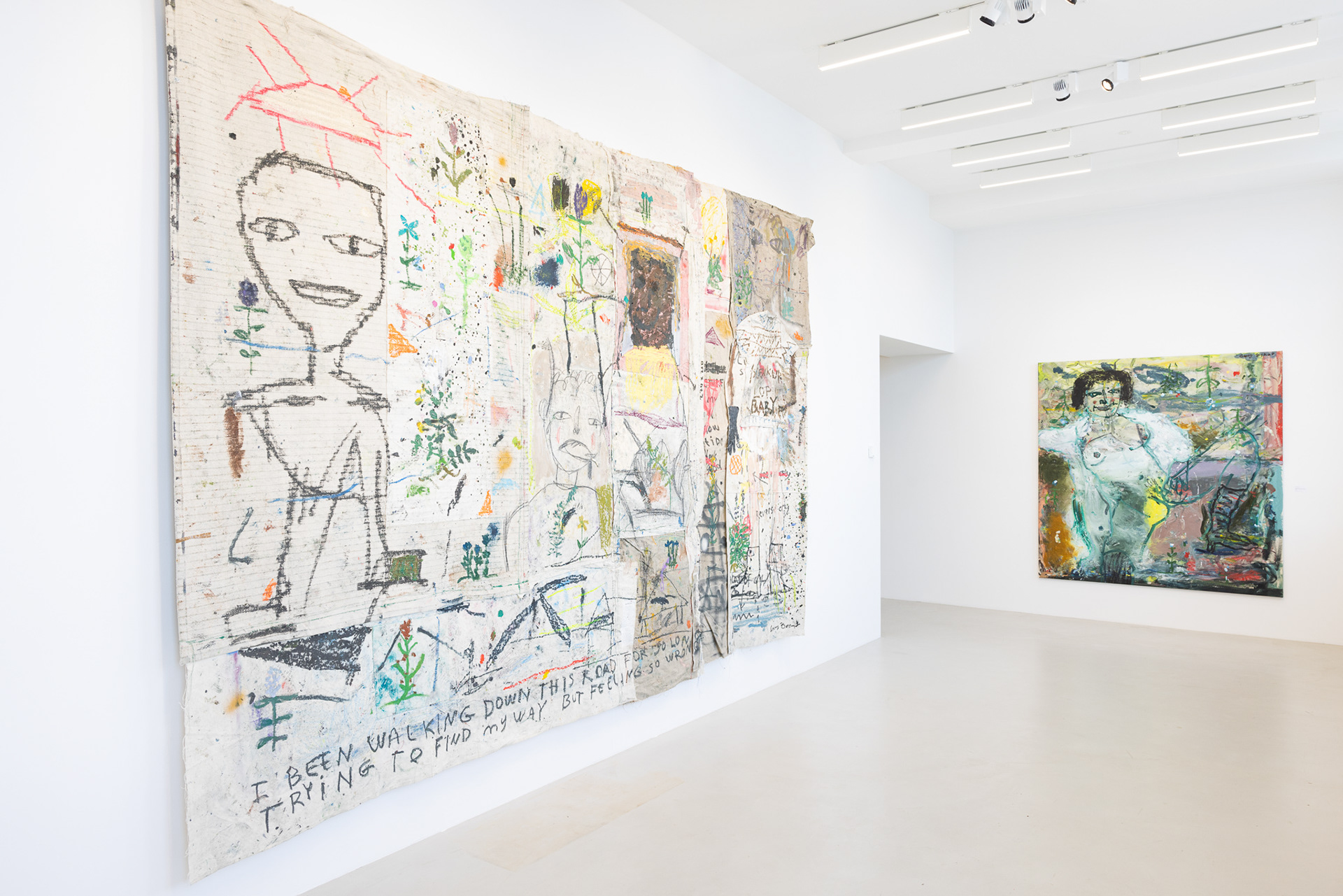
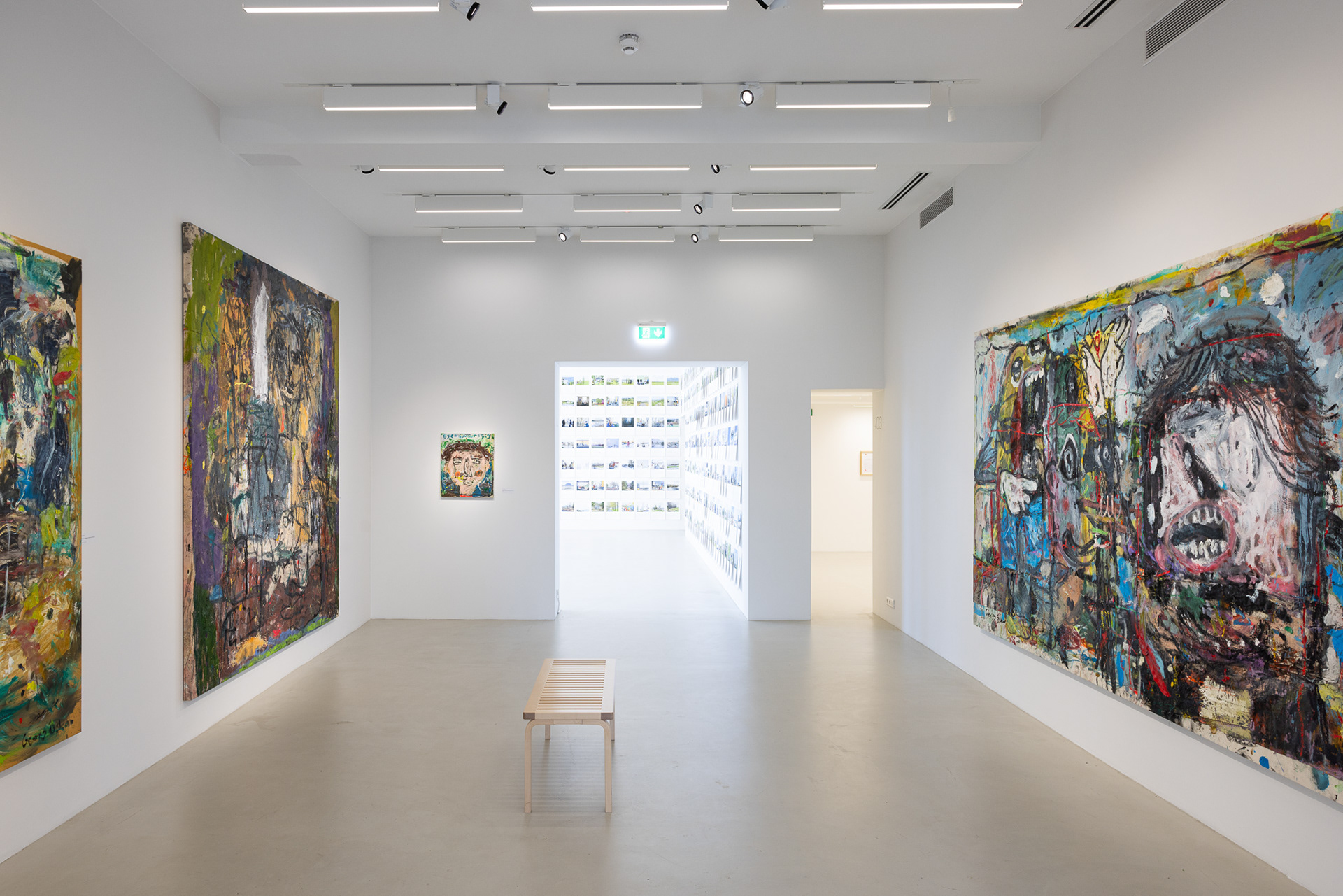
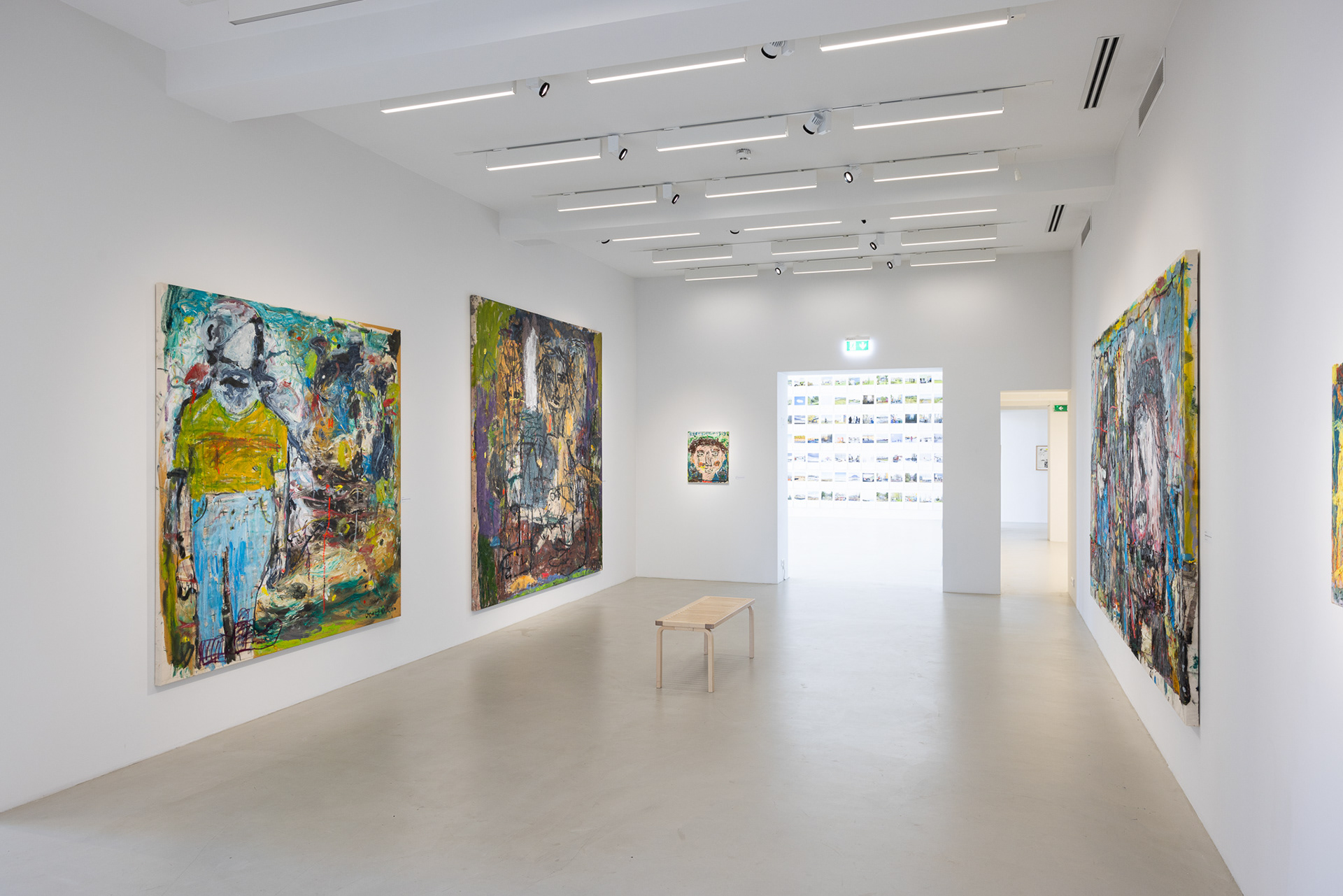
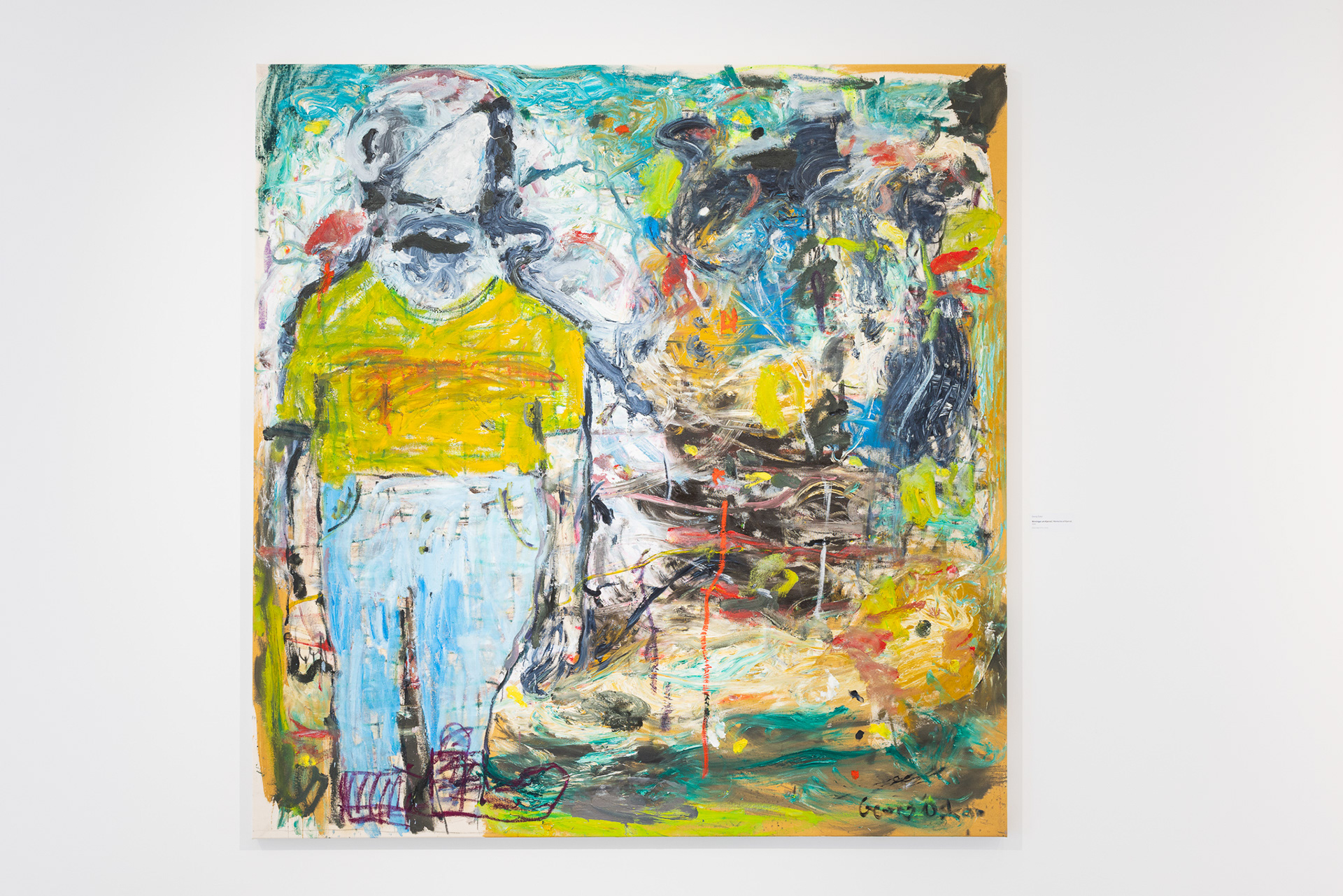
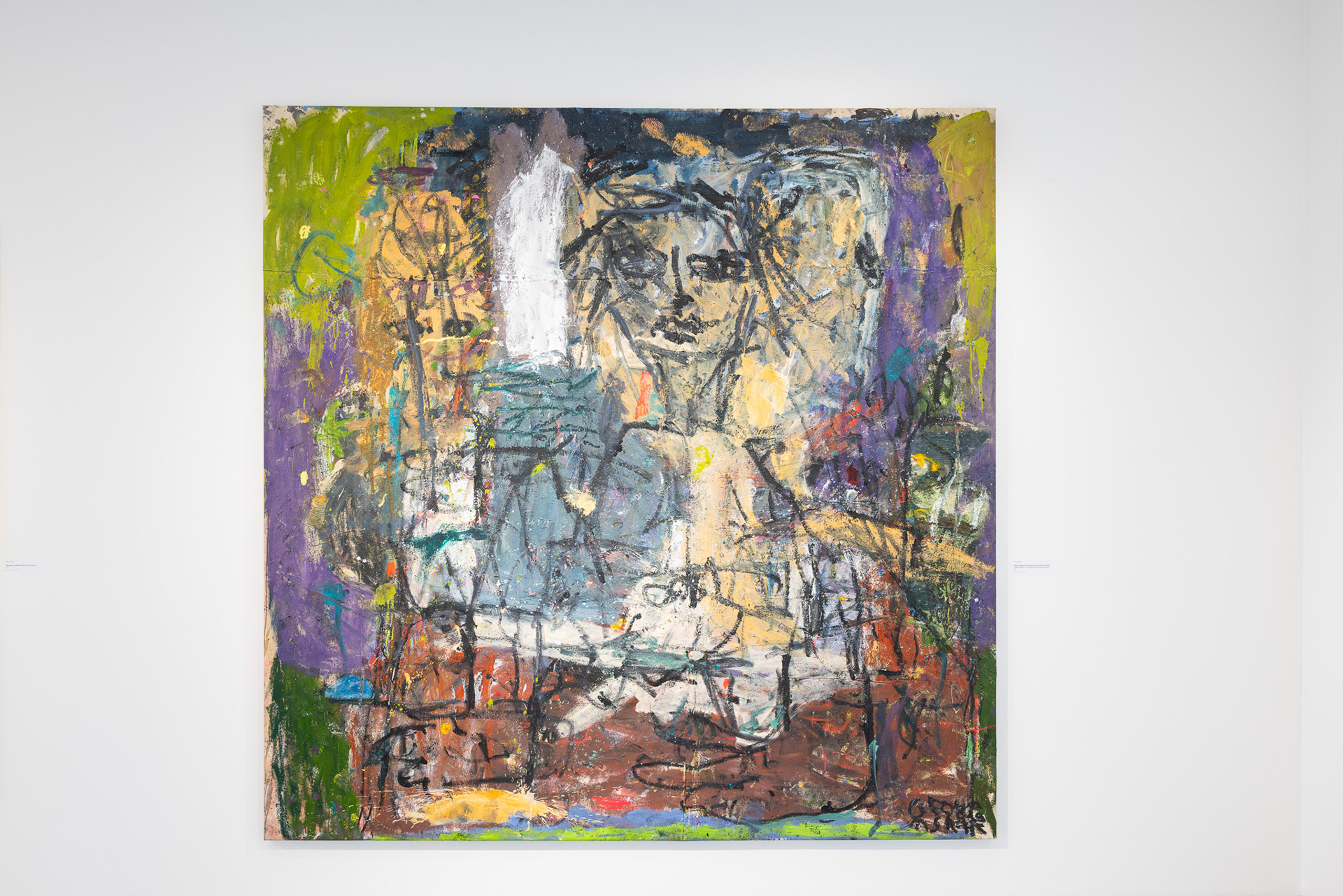
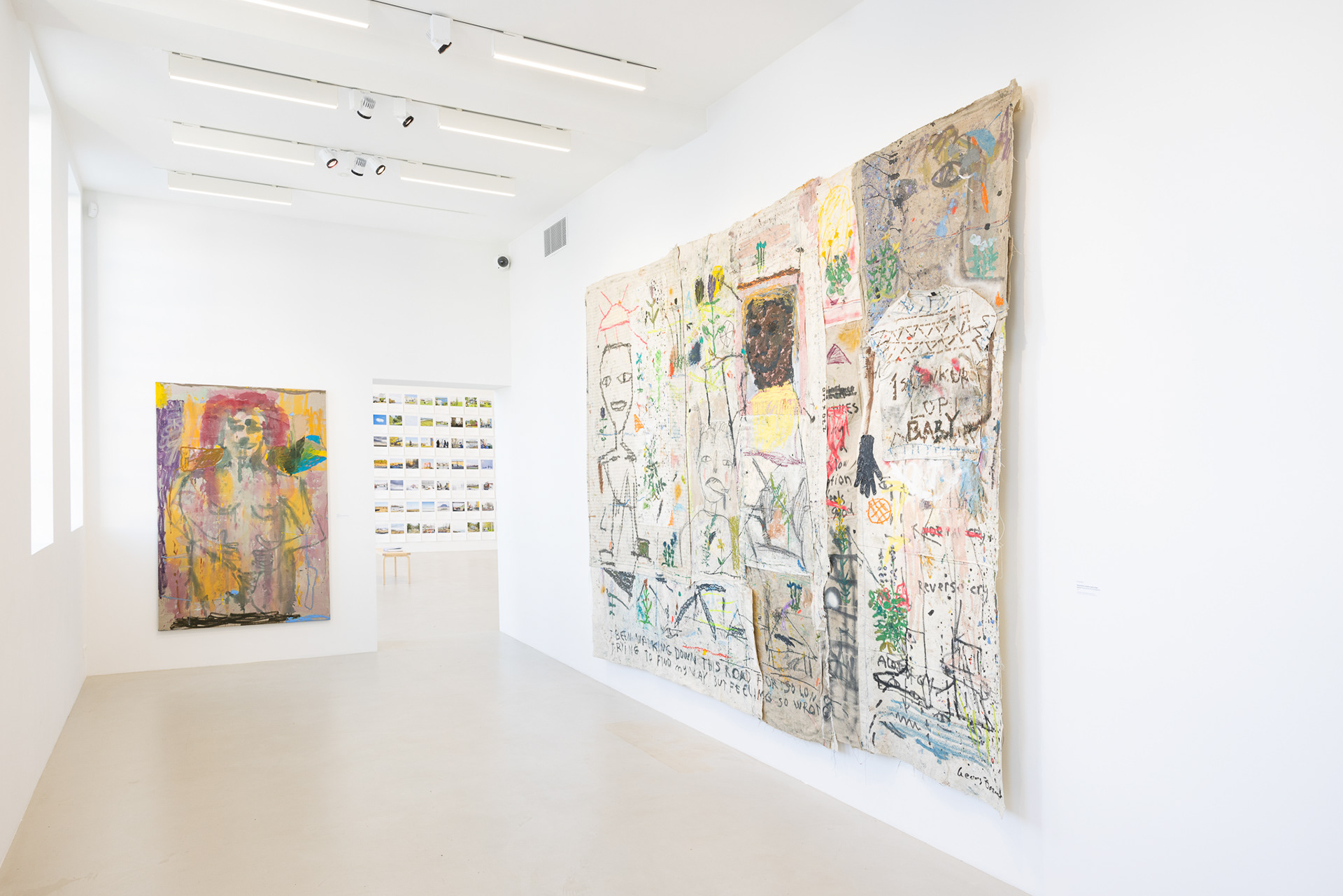
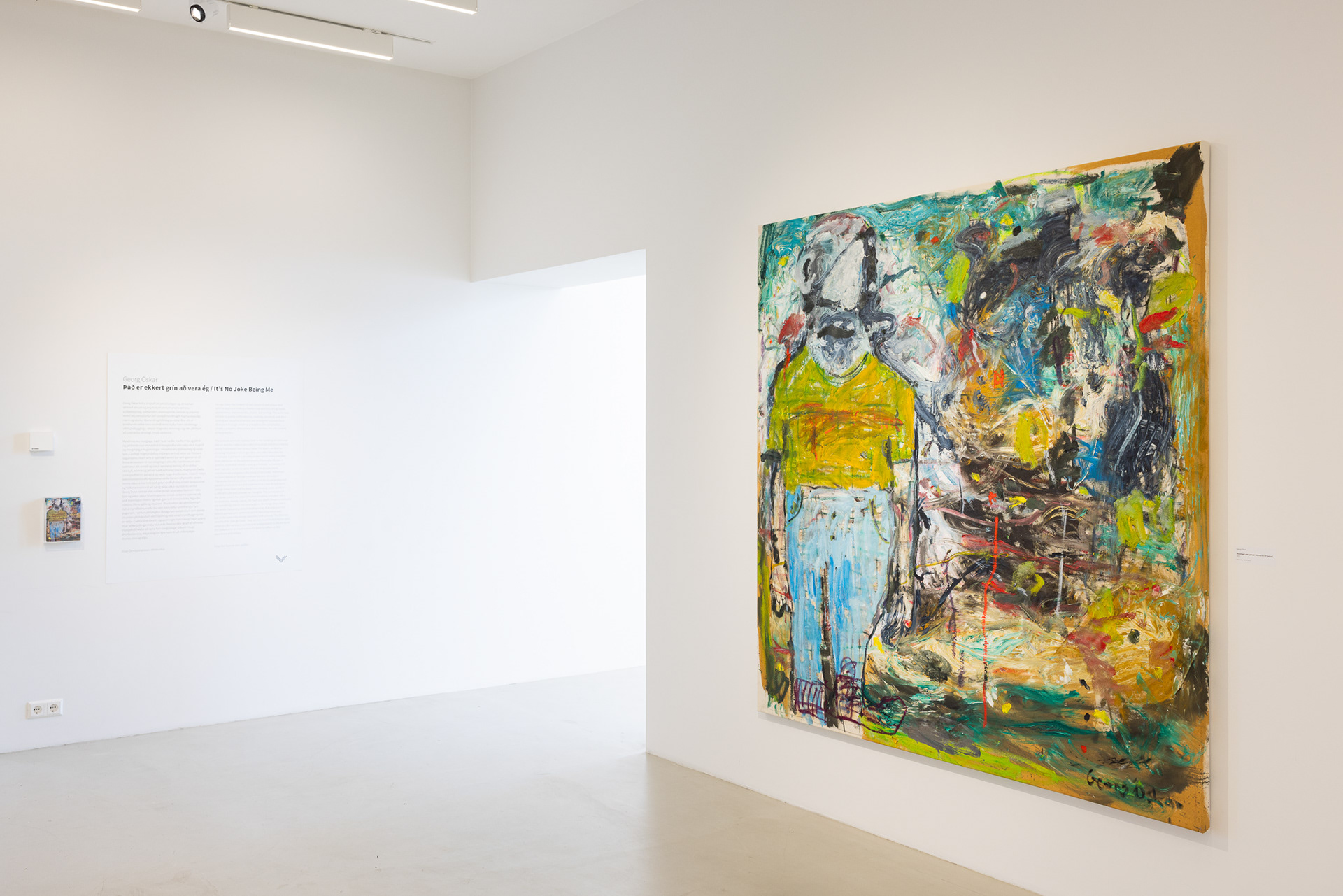
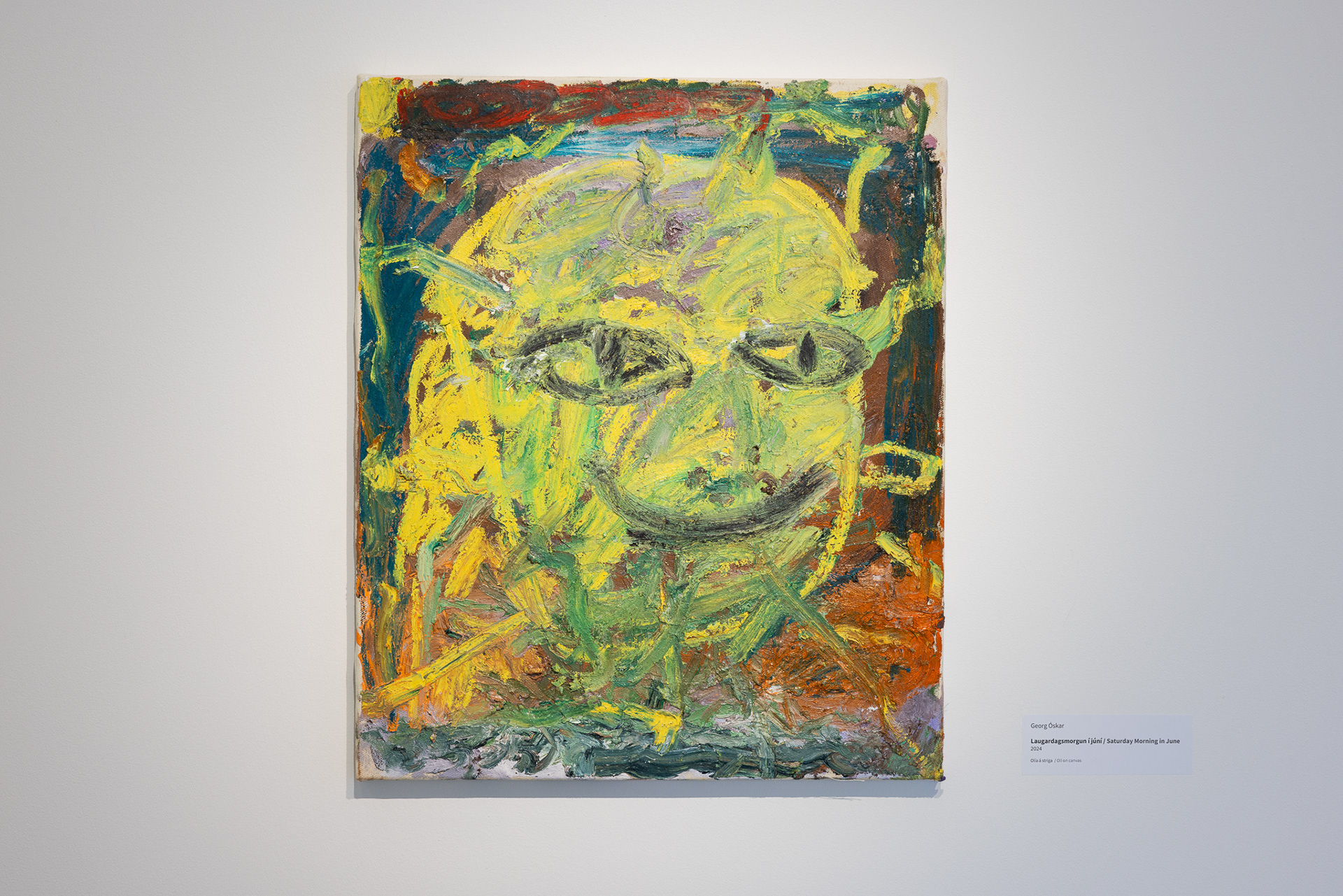
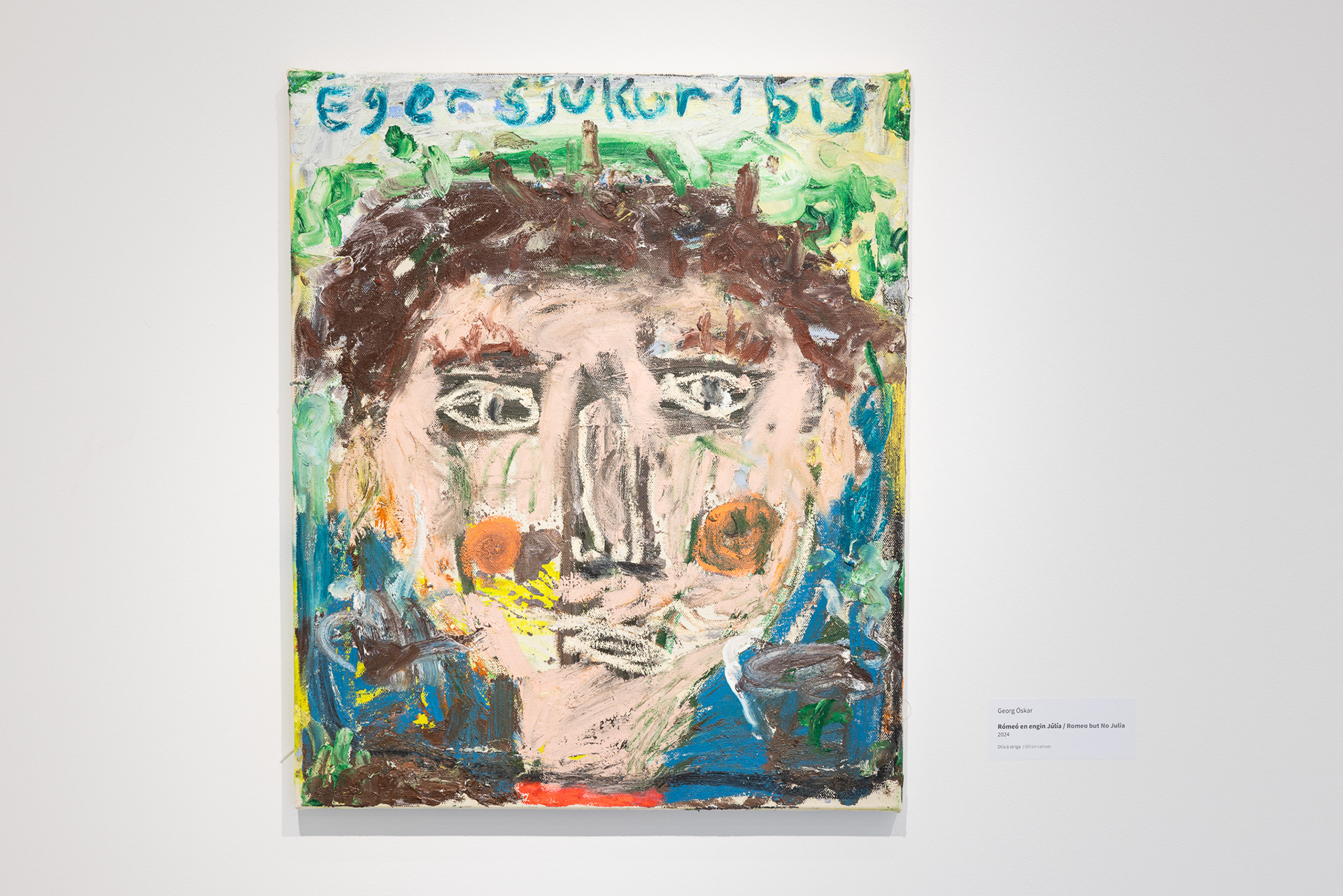
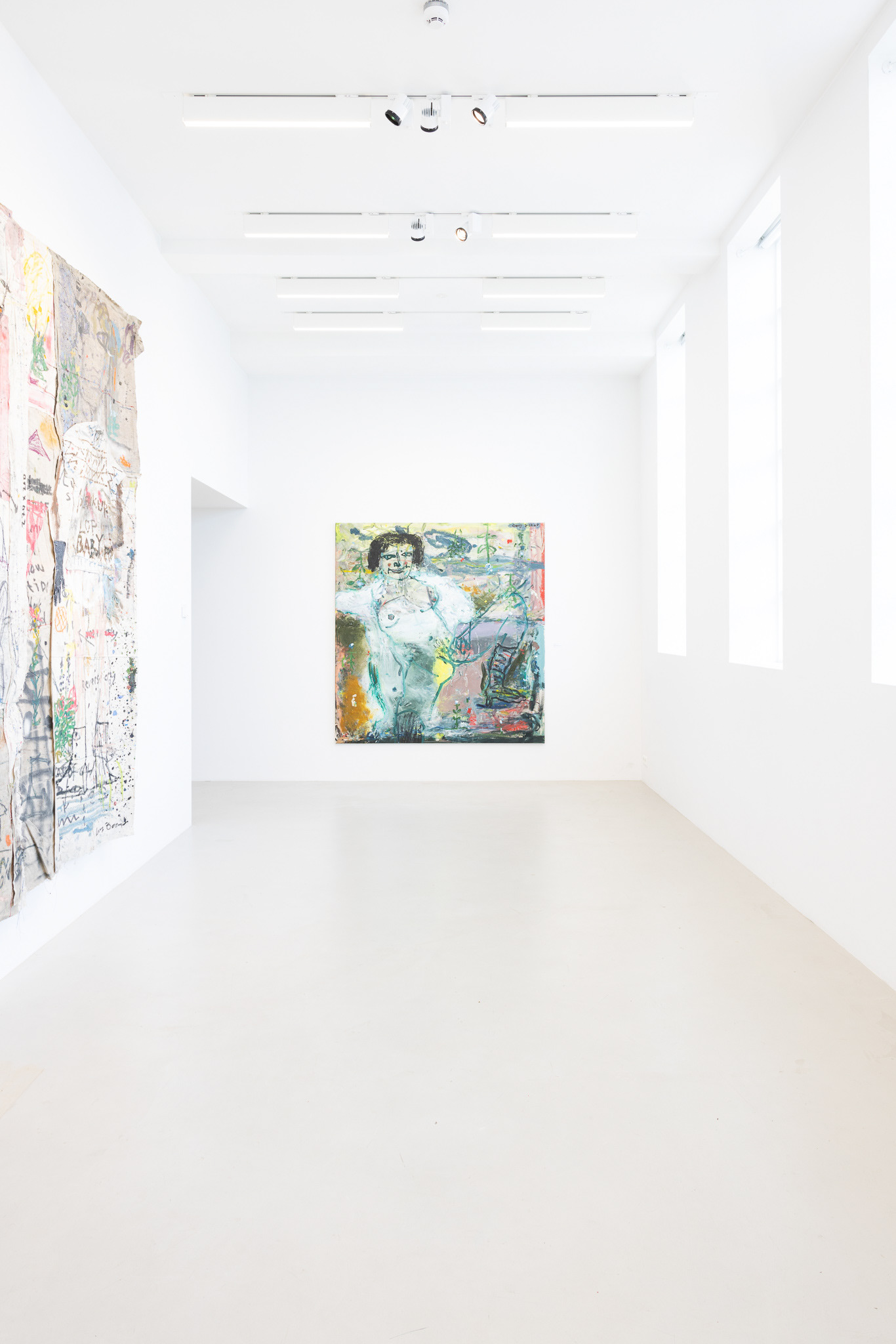
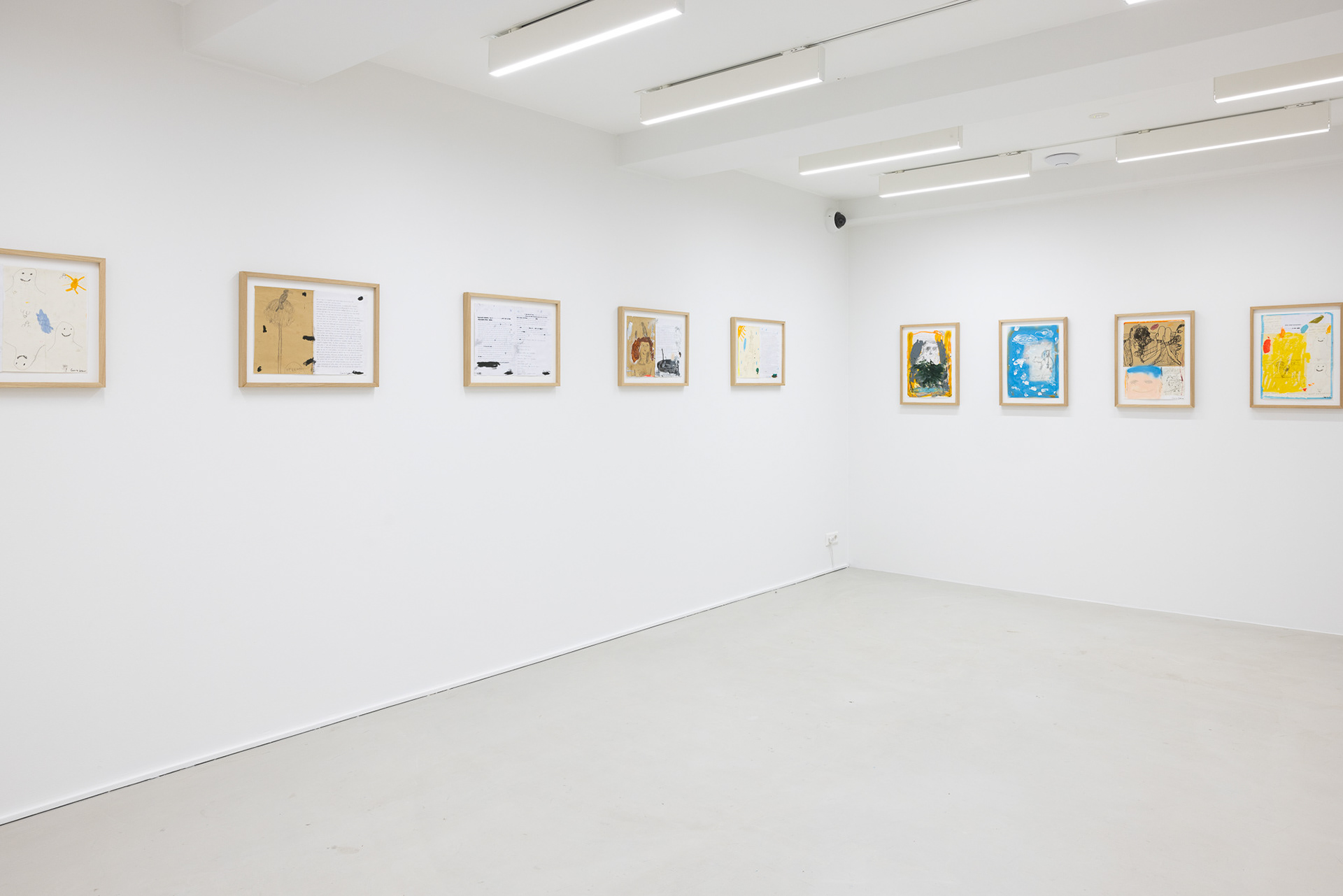
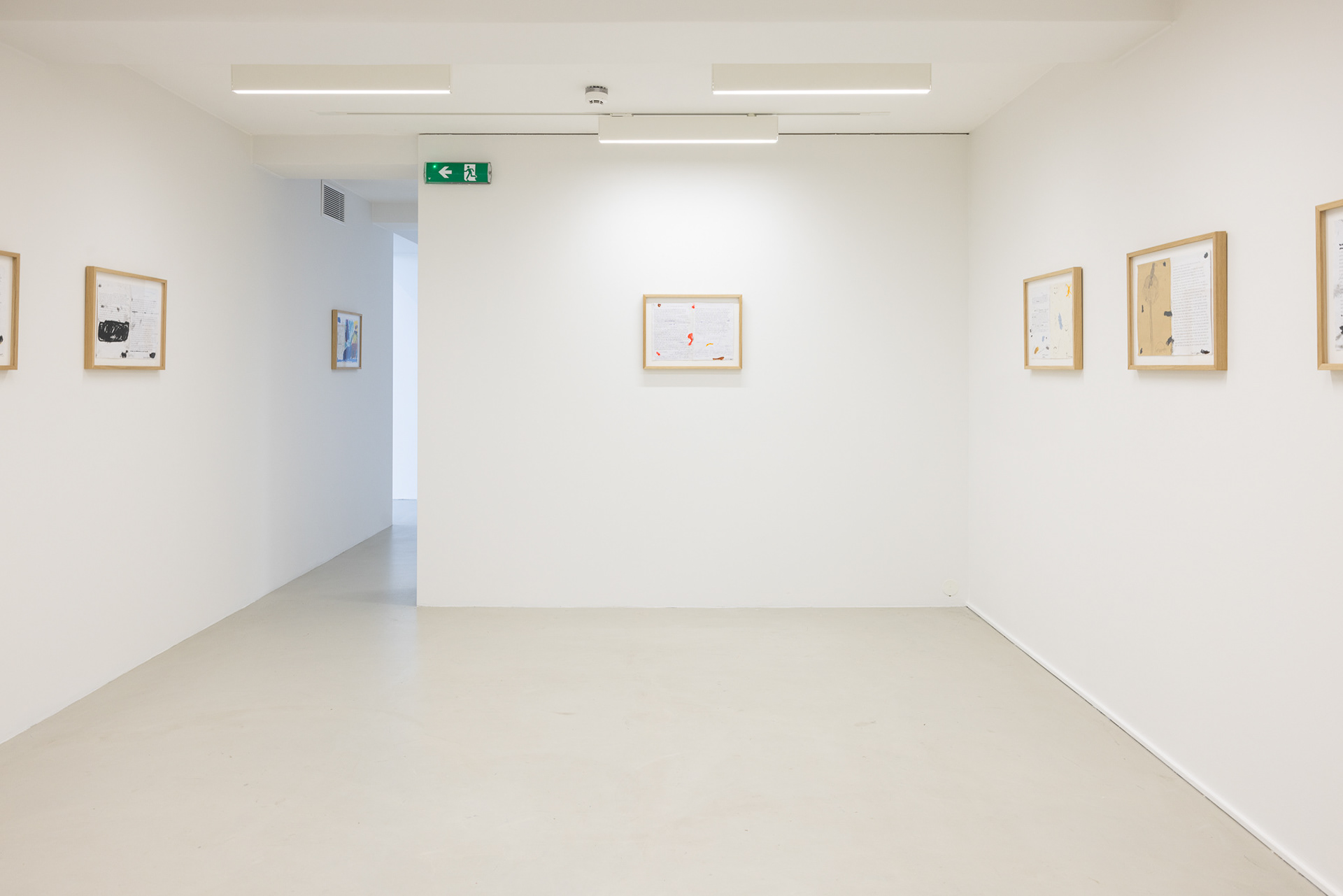
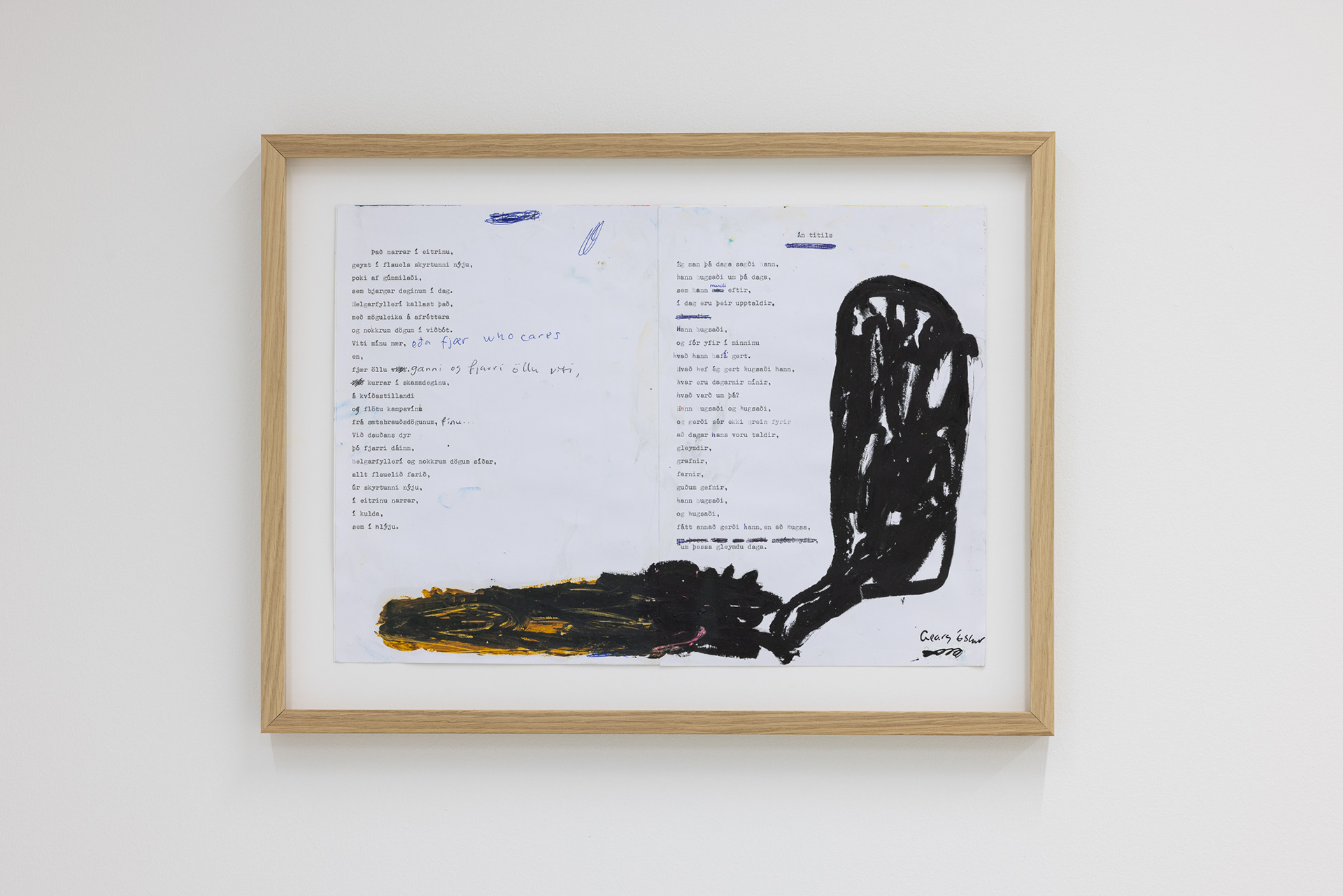
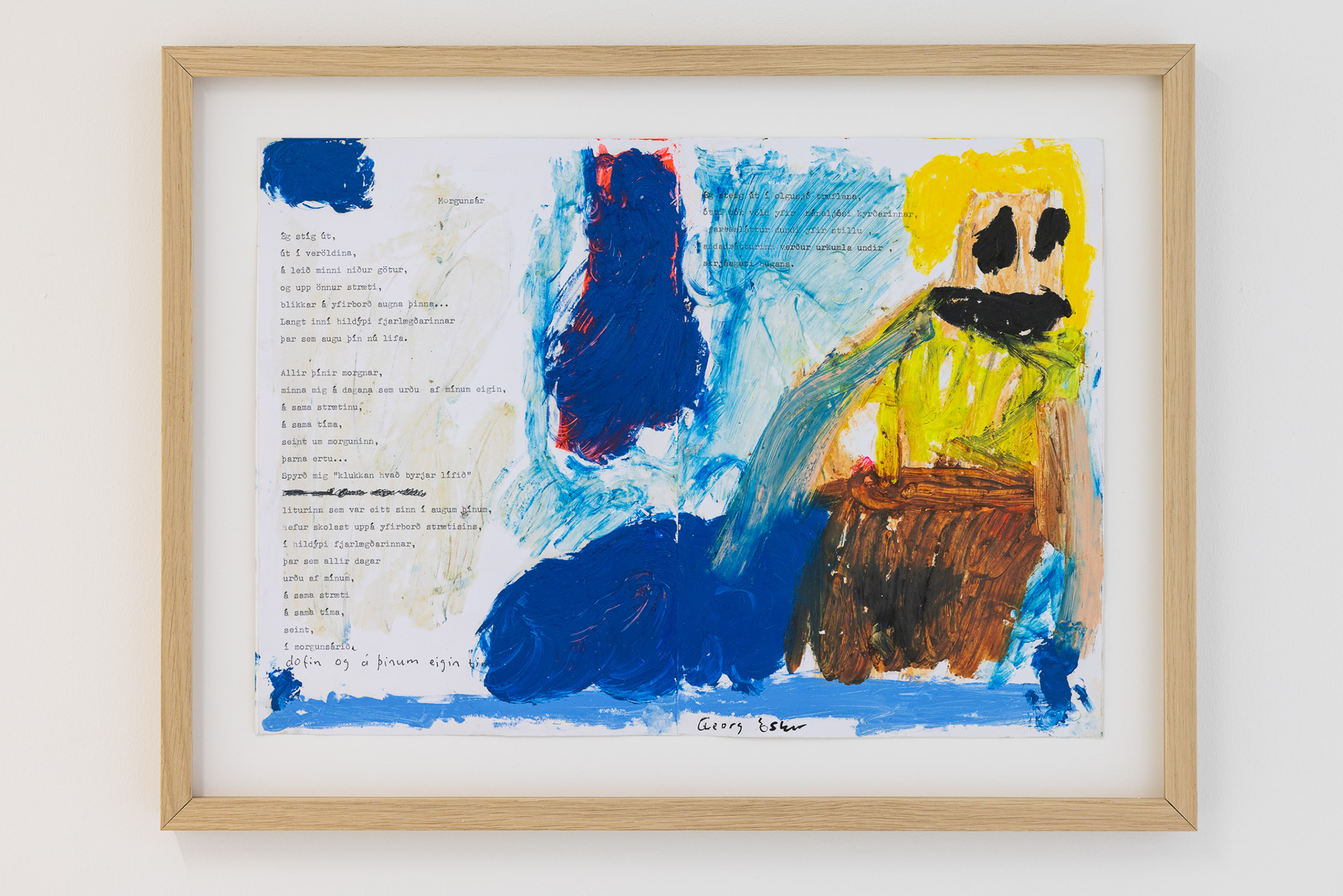
Georg Óskar has developed a personal and distinctive style through his large-scale, powerful works, which are instantly recognizable—spontaneous, expressionistic, chaotic, and compelling. The works testify to refined craftsmanship, inventiveness, sensitivity, and energy. A bold and free brushstroke is one of the defining characteristics of his paintings; through it, he actively supports the compositional structure, creates an intense atmosphere, and simultaneously emphasizes the material content of the works.
The paintings are multi-layered, both in their handling of color and surface texture, and the imagery points in many directions, evoking strong emotional responses and diverse associations. The subject matter is varied and sheds light on the painter’s rich imagination, as he often assumes the role of a storyteller. Each work is an autonomous world, frequently containing references to everyday events from contemporary life that are placed in an entirely different and unrelated context, resulting in an invented, comic, and sometimes even ironic existence. Ideas flow across the pictorial surface, calling out to one another and expanding in the mind of the viewer.
References to cartoon heroes or mythical creatures become recurring motifs. The works remind us how beneficial it can be to seek refuge in fantasy and parallel worlds in order to better see and understand our own reality. Georg Óskar does not shy away from presenting the world to us in a different light and prompting reflection. The content of the works spans a wide spectrum of human existence, often alluding to loneliness, beauty, nature, life itself, and death.
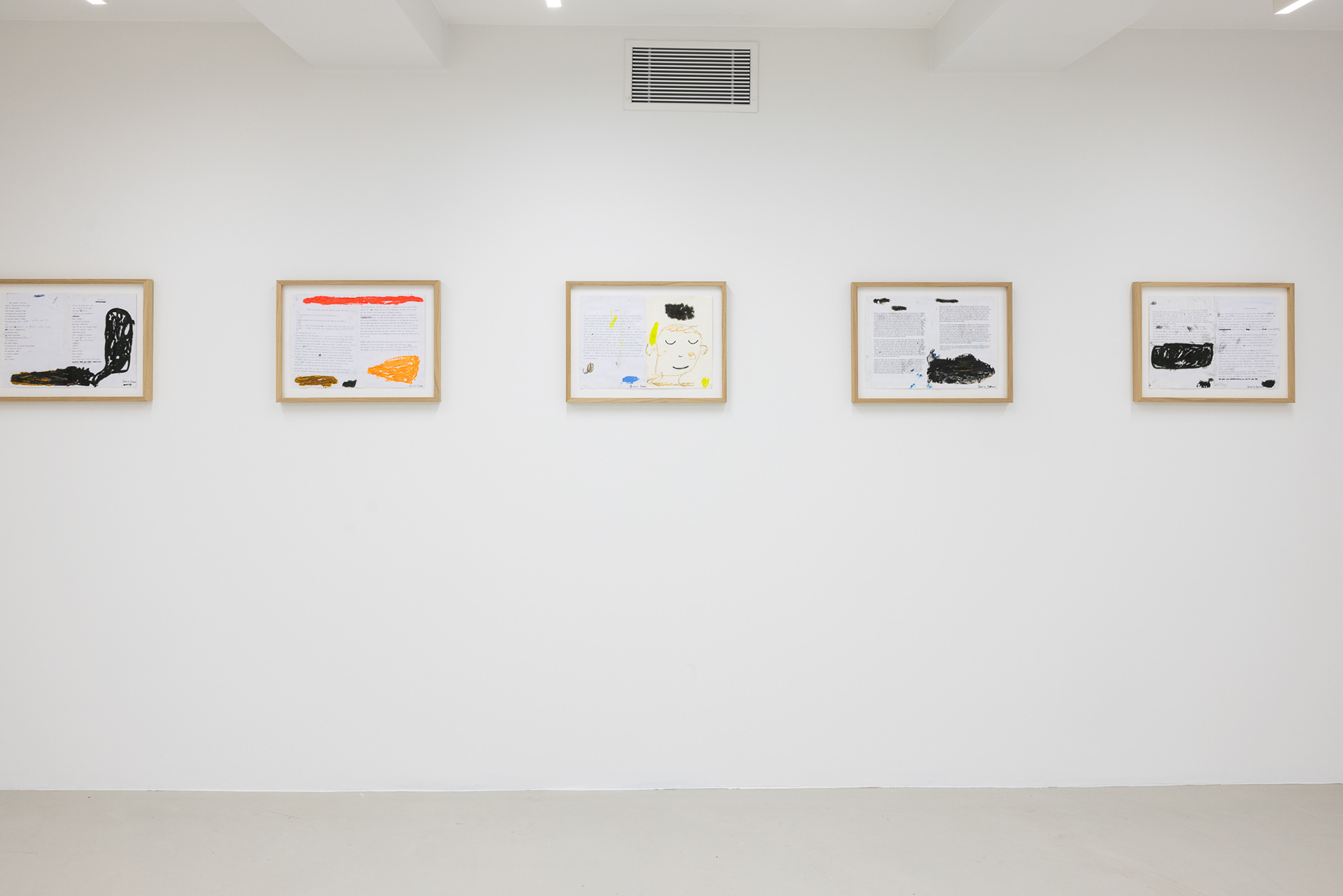
The viewer continually discovers something new within the pictorial surface the longer the work is observed. Text fragments frequently appear in the paintings, emerging from beneath overpainted sentences; they integrate seamlessly into the composition while simultaneously provoking curiosity and questions. For Georg Óskar, the titles of his works play a significant role. They are not intended to delimit the subject matter but rather to open up multiple interpretations in the mind of the viewer and create space for personal reflection—allowing each viewer to project their own experiences and narratives onto the work.
Text : Einar Örn Gunnarsson